JUPITER SEA & AIR
SERVICES PVT. LTD, EGMORE – CHENNAI, INDIA.
E-MAIL : Robert.sands@jupiterseaair.co.in Mobile : +91 98407 85202
Corporate News
Letter for Saturday - June 07,
2025
Today’s Exchange Rates
|
CURRENCY |
PRICE |
CHANGE |
%CHANGE |
OPEN |
PREV.CLOSE |
DAY's LOW-HIGH |
|
85.64 |
-0.169998 |
-0.19811 |
85.87 |
85.81 |
85.6225- 85.99 |
|
|
1.1394 |
-0.0051 |
-0.44561 |
1.1445 |
1.1445 |
1.1372- 1.1457 |
|
|
115.8992 |
-0.490997 |
-0.421855 |
116.5283 |
116.3902 |
115.8992- 116.6464 |
|
|
97.7984 |
-0.183899 |
-0.187686 |
98.2331 |
97.9823 |
97.7974- 98.3068 |
|
|
144.788 |
1.257996 |
0.876469 |
143.53 |
143.53 |
143.452- 145.089 |
|
|
1.3521 |
-0.0049 |
-0.361089 |
1.357 |
1.357 |
1.3508- 1.3585 |
|
|
98.981 |
0.240005 |
0.243066 |
98.696 |
98.741 |
98.655- 99.031 |
|
|
0.5942 |
-0.005 |
-0.834445 |
0.5972 |
0.5992 |
0.594- 0.598 |
/// Sea Cargo News ///
Gemini Partners on track for 90% schedule reliability target

In April, global schedule reliability improved by 1.7%
points M/M to 58.7%, the highest level recorded since November 2023, according
to Danish Maritime data analysis company Sea-intelligence. On year on year
level, the April score was higher by 6.5% percentage points.
Maersk was the most reliable top-13 carrier in
April with a schedule reliability score of 73.4%, followed by its Gemini
Partner Hapag Lloyd at 72.3% and MSC at 60.7%.
According to sea-intelligence’s methodology, alliance scores are based on arrivals in destination regions, but as that metric was not available for the new alliances in February, as the newly launched alliance services only had origin arrivals in February, the Danish analysts introduced a new measure for the new alliances, based on all arrivals, including the origin region calls on alliance services.
Both of these measures are shown in the following figure : “All
Arrivals” includes both origin and destination calls and is comparable to the
February 2025 score, and “Trade arrivals”, which is comparable to the old
alliances and only includes destination calls.

“When the new alliances are fully rolled out, these two measures will converge”, explained by the analysts.

Photo: Jaromir Chalabala/ Shutterstock
Spot rates out of Hong Kong to the US have been on the rise this week after dropping at the start of the month due to Washington imposing duties on the import of e-commerce goods.
Sources indicate that spot prices from Hong Kong to the US have increased by more than $0.40 cents since the start of the week to above $4.50 per kg.
The increases come after a rapid decline in prices at the start of the month when the US introduced tariffs and customs checks on e-commerce goods being exported from China to the US. In early April, the US also ramped up tariffs on other imports from China to 145%.
Since then, the US has reduced the tariff rate for e-commerce goods and reduced its overall tariff level to 30% for a period of 90 days.
The tariff reduction is likely to have resulted in shippers rushing to move cargo to take advantage of the lower duties.
Since the start of May, carriers have removed freighter capacity from the transpacific trade to better match supply and demand. This could mean pressure is also coming on the supply side.
According to statistics from Rotate, headhaul Asia Pacific-North America widebody freighter capacity over the first three days of this week stood at around 35,000 tonnes compared with 40,000 tonnes over the same three days a month earlier.
However, it should also be noted that prices on the trade lane remain below the levels recorded at the end of March/early April, when sources indicated spot rates had reached around $5.30-$5.40 per kg as shippers looked to move goods before the implementation of tariffs.
Indeed, IATA said that air cargo demand in March reached record levels as shippers front-loaded cargo.
In contrast, figures from data provider WorldACD show that for the week ending 11 May (week 19), airfreight volumes from China and Hong Kong to the US declined by 10% compared with week 18, which had already suffered a 14% decline on a week earlier.
Data from the Baltic Exchange Airfreight Index, using TAC Index data, show that the average rate from Hong Kong to North America over the first four months of the year, taking into account both spot and contract rates, stood at $5.40 per kg, although pure spot rates will have fluctuated a lot more during this period.

Lufthansa Cargo has made four improvements to its temperature-controlled products in an effort to enhance transport quality and process stability.
Focusing on additional monitoring, protection and speed of transport for pharma products, the improvements are designed to enhance Lufthansa Cargo's "Active Temp Control" solution to provide temperature control for shipments well as its "Passive Temp Support" solution to provide protection against temperature fluctuations.
These solutions are supported by the CEIV-certified Pharma Hub Frankfurt, a global network of 30 CEIV Pharma stations, including hubs in Munich, which achieved certification in 2021, and Brussels, as well as six GDP-certified stations.
The "Pharma Control Tower" service was launched at the end of April to provide greater transparency and security during transport.
"A team of experts monitors temperature-sensitive shipments in transit via the Lufthansa Cargo hubs in Frankfurt, Munich, and Brussels 24/7," said Lufthansa Cargo.
Customers can use the Pharma Control Tower to inquire about shipments to and from the 30 CEIV-certified stations worldwide.
"They benefit from a central point of contact that enables quick feedback and increased response times in the event of deviations, regardless of whether “Active Temp Control” or “Passive Temp Support” is used," added the cargo division of Lufthansa.
Secondly, special thermal covers are now being used for Passive Temp Support shipments to provide additional protection against heat or cold during ramp handling in order to maintain constant product temperatures.
Initially, the free Thermo Covers will be used on airfreight pallets in the main and lower decks during the summer months (May to September) on routes between Frankfurt and Atlanta, Cairo, Chicago, and Toronto.
The airline is also considering rolling this service out to other destinations and beyond the current period of time.
Additionally, Lufthansa Cargo is offering a smartULD service for tracking and monitoring temperature-sensitive shipments in real time. The service can be booked with the Active Temp Control product for certain container types.
"Sensors in the containers continuously record temperature data, enabling the creation of a complete temperature profile from delivery to pickup," said Lufthansa Cargo.
Customers can also benefit from a faster service offered with Passive Temp Support. The td.Zoom service "offers maximum transport speed for temperature-sensitive products, such as pharmaceuticals, diagnostics, biotechnological materials, and high-tech products".
Using td.Zoom "provides fast, prioritised access to capacity and the shortest transit times in the network without weight restrictions", added Lufthansa Cargo.
In addition to these product enhancements, Lufthansa Cargo also plans to enable customers to be able to view their containers' temperature data at selected stations via its website.
The temperature-controlled truck network will also be adapted further to customer requirements.

Neste will supply 8,800 metric tons (more than 3m gallons) of sustainable aviation fuel (SAF) to FedEx at Los Angeles International Airport (LAX).
This is the first major US SAF deployment by FedEx and will account for roughly a fifth of all jet fuel consumed annually by FedEx at LAX, stated a Neste press release.
This is also the largest SAF purchase by a US cargo airline at LAX to date.
Through this agreement, FedEx has purchased blended fuel from Neste that includes a minimum of 30% neat, i.e. unblended Neste 'MY Sustainable Aviation Fuel'.
Delivery of the fuel began in May 2025 and will continue for one year.
“Procuring SAF is an important component of our aviation emissions reduction strategy in the coming years, and we are pleased to have executed a deal with Neste to begin using this fuel in our air operations,” said Karen Blanks Ellis, chief sustainability officer and vice president of environmental affairs, FedEx.
“Our aviation network represents the largest amount of FedEx fuel use globally and, as a result, is our biggest opportunity to drive down emissions. As we work toward our goal of carbon-neutral operations by 2040, we need the SAF market to continue to grow to meet industry demand.”
Carl Nyberg, senior vice president, commercial, renewable products at Neste, added: “Neste is excited to work with FedEx and support their ambitious goal of reaching carbon-neutral operations by 2040 with our SAF.
"Recognising the important role of air cargo in the global economy, FedEx is demonstrating how this industry can leverage available lower-emission solutions like SAF to reduce its environmental impact. We look forward to further strengthening our cooperation."
Neste said its SAF reduces greenhouse gas emissions by up to 80% over the fuel’s life cycle, compared to using conventional jet fuel. The fuel is made from 100% renewable waste and residue raw materials, such as used cooking oil and animal fat waste.
SAF can currently be blended with fossil-based fuel in proportions of up to 50%.
Today, Neste’s global SAF production capability is 1.5m tons (around 515m gallons) a year.
Last month, IATA launched its SAF Registry to record SAF transactions in a standardised and transparent way and help enable a global market for SAF and support efforts to reach net-zero emissions by 2050.
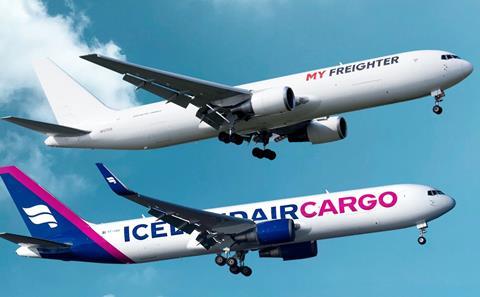
Uzbekistan-based My Freighter has signed an interline agreement with Icelandair Cargo to open up opportunities for cargo transportation between Central Asia, Europe and North America.
As a result of the partnership, My Freighter's customers now have access to a range of destinations across North America, including New York (JFK), Washington DC (IAD), Orlando (MCO), Minneapolis (MSP) and Toronto (YYZ), said the Tashkent-hubbed airline in a press release on 23 May.
The network expansion provided by the partnership also enhances My Freighter’s delivery capabilities, particularly for verticals such as e-commerce, pharmaceuticals and perishables, added the airline.
This interline agreement is part of My Freighter’s strategy to strengthen its position in the global cargo transportation market. The airline also has similar agreements with Air Europa and American Airlines to expand its presence in the Americas, plus Aeromexico to enable connectivity to Mexico.
My Freighter further commented in a LinkedIn post: "We’re excited to announce that My Freighter has signed an interline agreement with Icelandair Cargo — unlocking a strategic new cargo gateway through Iceland.
"This partnership strengthens our access to Northern Europe and enables extended connectivity to North America, including the U.S., via Icelandair Cargo’s robust network.
"By linking Central Asia with Iceland, we’re opening new lanes for time-sensitive cargo — including high-value goods like seafood and perishables — and enabling faster, more seamless logistics solutions across continents."
My Freighter has seven 767-300 freighters, the last of which was delivered earlier this month. Six of the airline's 767-300s are passenger to freighter (P2F) conversions and one is a production freighter. In March, My Freighter also added a Boeing 757-200P2F to its fleet.
According to data from Planespotters, Icelandair Cargo operates a fleet of two 767-300P2Fs and also utilises the cargo capacity of Icelandair’s passenger aircraft.
US express carrier Mountain Air Cargo has acquired Royal Aircraft Services to strengthen its maintenance, repair, and overhaul (MRO) services.
AirT subsidiary Mountain Air Cargo, based in Denver, North Carolina, said that the purchase of Royal Aircraft Services, located in Hagerstown, Maryland, will enable it to leverage Royal’s specialised MRO knowledge while enhancing operational efficiency across key markets.
“Royal Aircraft Services has a long-standing reputation for excellence in aircraft maintenance and support," said Mike Bandalan, chief executive of Mountain Air Cargo.
“This acquisition aligns perfectly with our mission to enhance operational efficiency and service quality for our valued partners. We look forward to integrating their expertise with our established MRO network.”
Royal Aircraft Services will continue to operate under its existing name.
“Partnering with Mountain Air Cargo marks an exciting new chapter for Royal Aircraft Services,” said Pamela and Austin Heffernan, longtime owners of Royal Aircraft Services.
“With our shared commitment to aviation excellence, this transition will strengthen service capabilities and enhance value for Royal’s customers and stakeholders. We are confident that under new ownership, Royal will continue to thrive and build on its legacy of quality and expertise.”
Mountain Air Cargo is a FedEx feeder airline and provides flight and maintenance services in the eastern half of the US and the Caribbean Islands.
The company also owns a full-service Part 145 MRO facility with a 64,000 sq ft repair station at Kinston Regional Jetport in North Carolina. Here, it performs maintenance work for itself and other commercial and government air carriers.
According to Planespotters, Mountain Air Cargo has a fleet of 33 aircraft in service currently. This includes 9 ATR 42s, 12 ATR 72s and 12 Cessna 408 SkyCouriers.
In January 2023, Mountain Air Cargo became the first carrier to operate Textron Aviation's Cessna SkyCourier freighter.
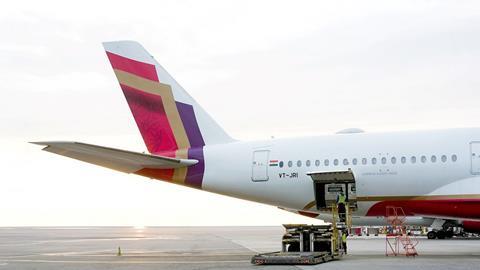
Air India's cargo division has carried out its first-ever airport-to-door international delivery of a critical pharma shipment.
The temperature-sensitive pharma shipment weighing six tonnes was flown from Delhi (DEL) to Paris Charles de Gaulle Airport (CDG) before being trucked to a warehouse in Brussels, in less than 36 hours.
Booked by SUN Pharma, the shipment of medication was packed into four lower-deck pallets on the Air India flight to CDG and required a steady 15 to 25 degrees Celsius to retain its effectiveness.
Brussels is not in Air India's network, but the airline teamed up with a company in Europe to ensure that once the flight landed in Paris, the pallets were transferred to a temperature-contrlled Road Feeder Service (RFS) truck service to Brussels.
Exactly 36 hours after leaving Delhi, the medication arrived at the consignee’s warehouse, confirmed Air India.
In April, Air India achieved Good Distribution Practice (GDP) certification for handling, storing and transporting time and temperature-sensitive pharmaceutical shipments.
"With the GDP certification, we have now become India’s only carrier with trained staff to manage active pharmaceuticals,” said Ramesh Mamidala, head of cargo, Air India.
He added: "These first shipments of our new airport-to-door service is a step forward in progressively pivoting our cargo offering from ‘airport-to-airport’ to world-class ‘airport-to-door’ services, delivered to the highest standards. It’s not just about getting it there, it’s about getting it there right – with precision."
In 2024-25, Air India moved over 4,000 tonnes of pharma goods globally. Going forward, the airline said airport-to-door deliveries will be a key part of its cargo business.

Cathay Cargo has reported reduced air cargo demand from Hong Kong and the Chinese Mainland in May following tariff and de minimis changes, but said volumes from other parts of its network are helping to fill the gap.
Writing in the company's monthly performance wrap-up for April, chief customer and commercial officer Lavinia Lau gave an early preview into its performance for this month: "Turning to May, we have seen steady replacement cargo from other parts of our network, including Southeast Asia, during the first half of the month amidst reduced demand from Hong Kong and the Chinese Mainland.
"We will continue to closely monitor the ongoing developments in the second half."
WorldACD data shows airfreight volumes from China and Hong Kong to the US have declined since the end of the de minimis exemption covering Chinese e-commerce packages in early May.
The US and China have since paused their trade war for 90 days, reducing tariffs from 145% to 30%.
Non-postal e-commerce packages from China are subject to the 30% tariff rate while packages being transported through postal networks face a 54% (or a $100 flat fee) rate.
Lau added that "the latest announcements regarding the tariffs between China and the US provide some reassurance to the market in the near term" and said the airline would adjust freigher capacity if necessary.
While it's not yet clear what impact trade disruption will have on Cathay Cargo's airfreight volumes this month, in April, Cathay achieved a 13.6% year-on-year increase in air cargo volumes.
Demand for specialist solutions offered by the business continued to grow, said Lau.
Available Freight Tonne Kilometres (AFTKs) increased by 8.9% while load factor decreased by 1.1 percentage points year on year.
In the first four months of 2025, the total tonnage increased by 12.4% compared with the same period for 2024.
Lau said: “Tonnage in April was 10.4% lower than in March, primarily due to the traditional first quarter-end peak in March and the various holiday periods in April. However, our specialist solutions maintained their growth momentum and we saw increased demand for our Cathay Priority solution on the Asia Pacific-United States trade lane ahead of the implementation of trade tariffs.
"Demand for our Cathay Expert solution continued to grow, supported by robust exports of semiconductor machinery from North Asia as well as ad hoc demand out of Europe to Hong Kong."
Cathay's year-on-year increase in air cargo volumes for April is well ahead of the 4% growth in global volumes for the month that Xeneta previously reported.
In addition to tariff and de minimis challenges, the Association of Asia Pacific Airlines (AAPA) recently called for governments to tackle supply chain disruption that is delaying deliveries of new aircraft, constraining capacity and threatening Asia Pacific trade growth.


Comments
Post a Comment