
JUPITER SEA & AIR
SERVICES PVT. LTD, EGMORE – CHENNAI, INDIA.
E-MAIL : Robert.sands@jupiterseaair.co.in Mobile : +91 98407 85202
Corporate News
Letter for Monday November 16, 2026
Today’s
Exchange Rates
|
Currency ▲ |
Price |
Change |
%Change |
Open |
Prev.Close |
Day's Low-High |
|
94.24 |
0.189995 |
0.202015 |
94.03 |
94.05 |
94.03 - 94.2875 |
|
|
1.1051 |
-0.0004 |
-0.036178 |
1.1055 |
1.1055 |
1.1044 - 1.1073 |
|
|
124.7147 |
-0.101601 |
-0.0814 |
124.4705 |
124.8163 |
124.4577 - 124.8354 |
|
|
104.225 |
-0.1091 |
-0.104568 |
104.0287 |
104.3341 |
104.0212 - 104.3367 |
|
|
160.016 |
0.17601 |
0.110116 |
159.84 |
159.84 |
159.655 - 160.188 |
|
|
1.3226 |
-0.0009 |
-0.068004 |
1.3235 |
1.3235 |
1.3218 - 1.3243 |
|
|
0.5895 |
0.0006 |
0.101882 |
0.5883 |
0.5889 |
0.588 - 0.5899 |
/// Sea Cargo News ///
Russian
builder tests unmanned cargo boat for Ob and Irtysh River supply runs

The unmanned cargo boat being prepared for the tests Russian Maritime Register of Shipping A Russian Maritime Register of Shipping observer assessed remote control and automatic route-following during the trials on Lake Pskov.
The 1,500kg-capacity boat is intended to
supply remote river settlements across Siberia.
Russia's Pskov Boat Shipyard has tested an
unmanned cargo boat on Lake Pskov, with a representative of the Russian
Maritime Register of Shipping (KM) attending as an expert
observer.
According to KM, its representative assessed
the stability of remote control, the execution of a route in automatic mode and
the vessel's operating characteristics against contemporary safety
requirements.
The boat has a length of eight metres, a beam
of two metres (2.5 metres including buoyancy sponsons), and a maximum cargo
capacity of 1,500 kg. Propulsion is provided by a 115hp (86kW) petrol
outboard.
Onboard equipment includes a GNSS receiver
and display, a heading sensor, radar, video cameras, a weather sensor, a
communications module, an AIS transponder, and an autopilot capable of
maintaining a prescribed track.
"The robotic cargo boat will soon
begin delivering construction materials, food, fuel and other goods to remote
settlements on the Irtysh and Ob Rivers, with no people aboard; this is a
completely uncrewed boat," said Pskov Boat Shipyard founder Vladimir
Chulkov.
New containerised
self-defence gun proposed for installation on commercial vessels

Sea Tridon naval gun variantsBAE Systems The weapon is designed for rapid fitting on merchant and government ships in high-risk areas. It is part of a new gun family that also includes a radar-equipped close-in weapon system.
BAE Systems recently unveiled its Sea Tridon
family of 40mm naval guns, which include a containerised version for
self-protection aboard commercial vessels on a temporary or mission-specific
basis.
The containerised variant is being offered
for military, government, and civilian vessels operating in high-risk areas.
BAE Systems said the modular construction will allow rapid installation with
minimal modification to the host vessel and limited integration
work.
Listed features include below-deck loading,
increased ammunition capacity, flexible command-and-control arrangements, and
optional surveillance radar integration.
The baseline Sea Tridon pairs a Bofors Mk4
40mm gun with an electro-optical fire control system. This lets the weapon
system identify targets, follow their movement, and engage them without
external sensors.
The gun system also has gyrostabilisation and
a 30-round ready-use magazine. BAE Systems has described it as a maritime
adaptation of a land-based gun concept, with drones, missiles and fast attack
craft among its intended targets.
A close-in weapon system adds a surveillance
radar and a dedicated radar tracker for all-weather tracking. Both are
integrated into a single mount with the gun. The system is intended to defend
against missiles and drones, as well as additional threats moving at high
speed.
All four configurations fire pre-fragmented,
programmable, and proximity-fused ammunition. Each round can be set to one of
six fuze modes immediately before firing.
Stefan Lofstrom, BAE’s Director of Marketing
and Sales, clarified that the company has no launch customer yet for the Sea
Tridon family but there have been, “advanced discussions with different
customers."
Lofstrom also said BAE Systems was in
discussions with several navies about fitting the guns to unmanned vessels
intended to remain at sea for weeks without human support.
World’s First
Nuclear-Powered Aircraft Carrier Sets Sail on Final Journey to Alabama for
Dismantling

Image Credits: Wikipedia The world’s first nuclear-powered aircraft carrier, the USS Enterprise of the U.S Navy began its final journey to Mobile, Alabama for scrapping, an endeavour that would cost Washington over $1 billion and stretch till the end of this decade.
The ship departed from Newport News
Shipbuilding, Virginia and is expected to reach its destination around November
13, 2026. Kevin Cormier, Navy’s deputy portfolio acquisition executive, said
that the aircraft carrier will be remembered for its legacy, made possible by
the sailors and support personnel whose dedication always kept it mission ready
throughout her career.
He added that all the crew and officers of
USS Enterprise should take pride in the role they played to ensure the ship
remained an example of naval excellence. The fuel has been removed although
nuclear reactors need to be carefully dismantled and disposed
of.
The navy said that all the components would
be either recycled or packaged and shipped to licenced sites for disposal. The
latter is applicable for radioactive waste and similar
parts.
Designated CVN-65, the ship was commissioned
in 1960 and entered service the following year as the first nuclear-powered
aircraft carrier in the world and a symbol of fine U.S naval
engineering.
The former USS Enterprise was part of many
important operations which took place during the Cuban Missile Crisis to beyond
the Iraq War.
The ship sailed over a million nautical miles
in over 50 years of its active service life, finally getting deactivated in
2012 and decommissioned in 2017.
NorthStar CEO Jeff Adix said that his
company’s Marine Dismantlement Services team is prepared to receive the
historic ship and that they have the required expertise, skill and equipment to
begin work and complete it safely along with handling other projects ongoing in
the facility.
A spot for the carrier has been reserved on
the waterfront near the SS United States which has remained there for almost
two years. In a week or so, it would be towed and sunk off Florida to become an
artificial reef.
ZIM’s ZX3
enters a Transpacific premium race already shaped by speed and landside access

ZIM’s planned ZX3 service between China and Los Angeles adds another competitor to the premium Transpacific market. But the significance of the launch extends beyond the advertised 12-day crossing from Shanghai. It places ZIM in competition with carriers that have already built expedited shipping products around terminal operations, chassis availability and faster access to inland transport.
The new service, announced by ZIM, is scheduled to begin in December 2026. As Container News
reported, ZX3 will connect Xiamen and Shanghai
directly with Los Angeles, joining the carrier’s existing ZEX and ZX2 expedited
services.
The competitive question is not whether ZIM
can advertise a fast crossing. It is whether the new service can translate that
speed into reliable cargo availability and efficient onward delivery in a
market where rivals already offer comparable features.
Ocean transit is only part of the comparison
ZIM is advertising a 12-day Shanghai–Los
Angeles transit and a 15-day connection from Xiamen. Both are scheduled service
propositions rather than demonstrated operating results, as ZX3 has yet to
begin.
The wider market provides useful context,
although published transit figures require careful interpretation.
CMA CGM’s Eagle Express X (EXX) is marketed
as an expedited Transpacific service linking Shanghai with Los Angeles. Its
offering places emphasis on fast ocean transit and coordinated terminal
operations, although advertised transit times should be distinguished from the
carrier’s current sailing schedules and actual voyage performance.
Matson’s published CLX service information
lists a 10-day Shanghai–Long Beach ocean transit, with cargo availability the
following day. The destination is Long Beach rather than Los Angeles, making it
relevant to competition across the Southern California gateway without
representing an identical port-to-port comparison.
These distinctions matter because a carrier’s
advertised crossing time does not necessarily reflect its current schedule,
actual voyage performance or the time at which an importer can collect cargo.
Consequently, ZX3’s 12-day offering should be
assessed as part of a competitive expedited product, not as evidence that ZIM
will operate the fastest service in the market.
The terminal is becoming part of the product
The most revealing aspect of ZX3 is its
destination-side operating model.
ZIM plans to use a dedicated berth at West
Basin Container Terminal in Los Angeles, supported by a dedicated container
yard, pickup lanes and chassis arrangements. The carrier also advertises Monday
arrivals and expedited cargo availability without appointments or queues.
These features are commercially important
because the benefit of a fast ocean crossing can be diminished by delays
between vessel arrival, discharge and cargo collection.
Yet ZIM is not alone in offering such
arrangements.
CMA CGM’s EXX product uses Fenix Marine Services in Los Angeles and advertises
dedicated chassis, a container yard for expedited pickup and coordinated cargo
handling. Its commercial proposition combines ocean speed with predictable
terminal operations.
Matson similarly promotes dedicated terminal
facilities at Long Beach, next-day cargo availability and an off-dock operation
designed to facilitate faster truck collections.
The common feature is the integration of
terminal access into the shipping product. Rather than treating discharge as
the end of the ocean carrier’s competitive proposition, these services place
greater emphasis on what happens immediately after the vessel arrives.
ZX3 therefore represents an expansion of
ZIM’s participation in an established form of premium competition, rather than
the introduction of an entirely new operating concept.
Inland connections extend the competitive
field
The same pattern is visible in inland
transport.
ZIM says ZX3 will provide expedited rail
connections to destinations including Chicago, New York, Memphis, Dallas and
Kansas City. This extends the service proposition beyond importers collecting
containers in Southern California.
CMA CGM promotes its EXX RailFlash offering,
including rail connections from Los Angeles to major inland markets. Matson
also markets expedited intermodal services through its logistics operations.
For shippers, these arrangements can be as
important as the ocean crossing itself. A container that arrives quickly at the
West Coast but misses an inland connection may lose much of its time advantage.
However, the available announcements do not
establish which carrier offers the fastest end-to-end transit to individual
inland destinations. Such a comparison would require matching origin points,
vessel schedules, discharge times, rail departures and cargo availability at
the final destination.
It would also need to account for differences
between advertised services and actual performance.
Without those measurements, no reliable
ranking of ZX3, EXX and CLX/MAX can be established across the full supply
chain.
What ZX3 adds to ZIM’s network
Beyond individual transit times, ZX3 expands
the geographical coverage and frequency of ZIM’s expedited offering.
The company says the addition will bring its
premium network, including ZEX and ZX2, to seven weekly departures from China
and Vietnam to the US West Coast.
This is relevant because premium service
competition also depends on sailing frequency and the availability of
alternative departures. More weekly options may help customers manage shipment
timing, although the number of departures does not by itself establish
capacity, reliability or market share.
Xiamen is another important element. ZIM is
positioning ZX3 as a dedicated premium offering for that origin, alongside an
additional direct Shanghai connection.
The commercial significance will depend on
how much cargo the service attracts, whether its schedules perform consistently
and how effectively the terminal and inland arrangements operate after launch.
ZIM has not provided sufficient public
operating data to quantify those outcomes.
The real test begins after launch
The competitive implications of ZX3 will
become clearer once the service enters operation in December.
Several measures will matter: actual Shanghai
and Xiamen transit times, consistency of Monday arrivals, the interval between
berthing and cargo availability, and the performance of inland connections.
Those results will determine whether ZIM can
deliver a commercially meaningful alternative to established expedited
offerings.
For now, the launch demonstrates that premium
Transpacific competition increasingly encompasses the full journey from Asian
loading port to US cargo collection and inland distribution.
ZIM’s challenge is not simply to cross the
Pacific quickly. It is to deliver the coordinated terminal and inland
performance that customers increasingly expect from an expedited shipping product.
Maersk
raises 2026 guidance as Ocean earnings surge in third quarter

Maersk has raised its full-year 2026 earnings guidance following a strong third quarter, driven by higher ocean freight rates and continued supply chain disruptions that limited available shipping capacity.
The Danish shipping group reported revenue of
US$18.1 billion, up 27% from US$14.2 billion in the same period last year.
EBITDA increased to US$4.7 billion from US$2.7 billion, while EBIT rose to
US$3.3 billion from US$1.3 billion.
Net profit also increased to approximately
US$3 billion, compared with US$1.1 billion in the third quarter of 2025.
Following these results, Maersk increased its
full-year underlying EBITDA forecast to US$14–14.5 billion, from its previous
range of US$10.5–12.5 billion.
The company also raised its underlying EBIT
guidance to US$8–8.5 billion, compared with the previous forecast of US$4.5–6.5
billion. Meanwhile, expected free cash flow increased to more than US$3
billion.
The revised outlook assumes global container
market volume growth of approximately 4% for the full year.
Higher freight rates drive Ocean earnings
Maersk’s Ocean division accounted for most of
the improvement in quarterly earnings. Ocean revenue increased by 37% to
US$12.6 billion, while EBIT reached US$2.6 billion, compared with US$567
million a year earlier.
The average loaded freight rate rose by
approximately 46% year on year to US$3,287 per forty-foot equivalent unit
(FFE).
However, loaded container volumes declined by
0.8% to 3.37 million FFE. Despite the slight decrease, vessel utilisation
remained high at 96%.
The increase in freight rates was supported
by capacity constraints across global shipping networks. Severe typhoons in
East Asia caused significant port congestion, while the continued closure of
the Strait of Hormuz disrupted cargo flows and increased operating costs.
According to Maersk, average global port
waiting times reached 16.6 hours at their peak in August, the highest level
since January 2023.
Meanwhile, the Shanghai Containerised Freight
Index increased by 46% during the third quarter compared with the previous
quarter.
Higher fuel prices also affected operating
costs. Maersk’s average bunker price increased by 49% year on year, although
bunker consumption declined by 6.3%, partly supported by the partial return to
the Suez Canal.
Vincent Clerc, Chief Executive Officer of
Maersk, said global trade remained resilient despite geopolitical uncertainty
and continued supply chain disruptions.
He also highlighted growing demand linked to
electrification, energy investment and the expansion of artificial intelligence
infrastructure.
Logistics and terminal operations support
growth
Maersk’s Logistics & Services division
reported revenue of US$4.5 billion, an increase of 13% year on year.
The division’s EBIT rose to US$259 million
from US$218 million, while its EBIT margin improved to 5.8% from 5.5%.
Growth was particularly strong in landside
logistics, supported by landbridge operations across the Gulf region. Air
freight, project logistics and contract logistics also contributed to higher
revenue.
Meanwhile, the Terminals division recorded
its highest quarterly revenue, reaching US$1.52 billion.
Terminal volumes increased by 2.6%, supported
by growth in Africa and Europe of 14% and 6.7%, respectively.
However, Terminals EBIT declined to US$493
million from US$571 million a year earlier. The comparison was affected by an
impairment reversal recognised in 2025. Excluding that effect, EBIT increased
by 6.5%.
Maersk advances fleet and terminal
investments
Alongside its financial performance, Maersk
continued investing in vessel capacity and port infrastructure.
As part of its fleet renewal programme, the
carrier ordered 26 dual-fuel containerships, each with a capacity of 18,600
TEU. Deliveries are scheduled for 2029 and 2030.
In Bangladesh, APM Terminals began
construction of the Laldia terminal in Chattogram during August. The project is
expected to add 900,000 TEU of annual handling capacity.
Meanwhile, APM Terminals Suape commenced
commercial operations in Brazil in September. The new facility will initially
provide up to 400,000 TEU of annual capacity.
For the first nine months of 2026, Maersk
generated revenue of US$46.8 billion, compared with US$40.7 billion during the
corresponding period of 2025.
Looking ahead, the company expects resilient
container demand to support its upgraded financial outlook. However,
geopolitical developments, freight rates and fuel costs remain important
sources of uncertainty.
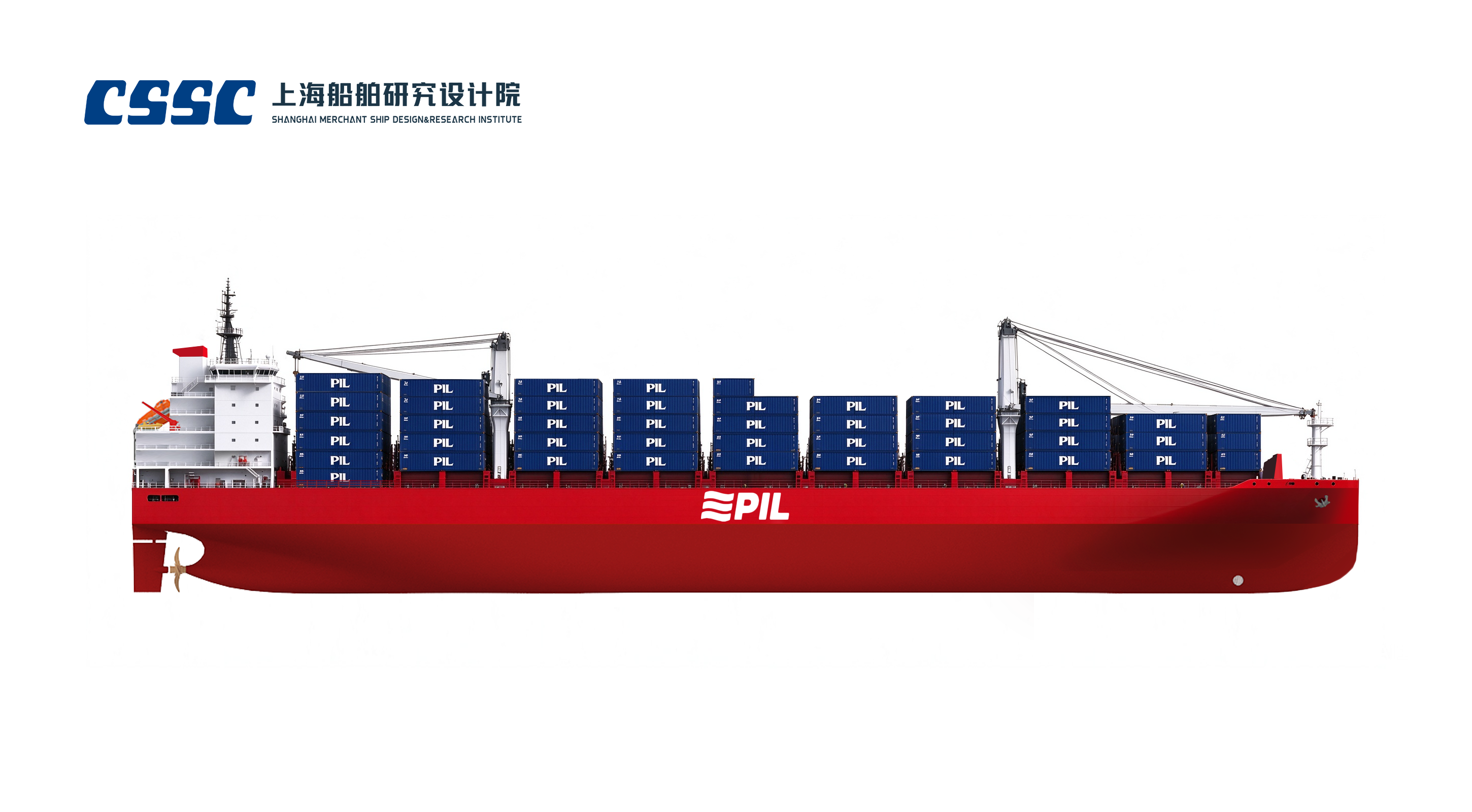
PIL orders
seven methanol-ready feeder containerships in China

Contract Signing between PIL and Huanghai Shipbuilding Co Ltd
Pacific International Lines (PIL) has ordered
seven new methanol-ready feeder containerships from Huanghai Shipbuilding in
China, as part of its fleet renewal and expansion programme.
Each vessel will have a capacity of 1,400
TEU, bringing the combined capacity of the order to 9,800 TEU. Deliveries are
scheduled between 2029 and 2030.
The new ships will strengthen PIL’s regional
shipping network, particularly its Intra-Asia and Pacific Islands services.
They will also support connections between smaller ports and major
transshipment hubs.
According to the Singapore-based carrier, the
vessels have been designed to meet the specific operational requirements of
these regional markets.

New feeder vessels designed for regional operations
The seven containerships will measure 172
metres in length and 25 metres in width. Their dimensions have been customised
to maximise capacity while maintaining flexibility when serving smaller ports.
In addition, the vessels will feature
energy-saving technologies to improve propulsion efficiency and reduce fuel
consumption.
These include pre-swirl vanes and propeller
boss cap fins, which are designed to improve water flow around the propeller.
The ships will also feature enhanced cargo
safety equipment, including fixed fire water monitors and cargo hold water
spray systems.
Furthermore, the vessels will incorporate
digital technologies to support operational monitoring and vessel performance.
Lars Kastrup, Chief Executive Officer of PIL,
said the investment would strengthen the carrier’s capacity across its
Intra-Asia and Pacific Islands network.
He also highlighted the importance of
improving operational efficiency while supporting PIL’s long-term environmental
objectives.
PIL continues fleet renewal programme
The new containerships will be
methanol-ready, allowing PIL to prepare for the potential future adoption of
lower-emission fuels.
However, the announcement does not confirm
that the ships will be equipped with methanol dual-fuel engines upon delivery.
The order forms part of PIL’s wider fleet
renewal strategy, which aims to improve efficiency and support its target of
achieving net-zero emissions by 2050.
Huanghai Shipbuilding was selected for its
technical capabilities and experience, according to PIL.
The carrier has not disclosed the financial
value of the contract.
Once delivered, the seven vessels will
provide additional feeder capacity for PIL’s regional operations and support
cargo connections across its international network.
Hapag-Lloyd
unveils standalone AMX and ASX services linking Asia and Latin America

Hapag-Lloyd has announced two standalone container shipping services connecting Asia with Latin America, as the German carrier prepares to expand its network in 2027.
The new AMX and ASX services will provide
connections to Mexico and the East Coast of South America, respectively. Both
will operate independently under Hapag-Lloyd’s network.
According to the carrier, the changes aim to
improve regional connectivity and provide customers with additional routing
options.
The AMX service is scheduled to begin in
January 2027, while ASX will follow in April.
AMX to connect Asia and Mexico from January
The new AMX service will offer weekly
sailings between Asia and Mexico, with direct calls in China, South Korea and
three Mexican ports.
The planned port rotation is: Ningbo –
Qingdao – Busan – Ensenada – Manzanillo – Lázaro Cárdenas.
Through transshipment connections in Mexico,
customers will also gain access to additional destinations along the West Coast
of Latin America.
Hapag-Lloyd said the standalone structure
will provide greater operational control over the service. Meanwhile, regular
weekly departures will support cargo planning across the trade corridor.
Detailed vessel schedules are expected to
become available closer to the launch.
ASX to strengthen Asia–South America
connections
The second service, ASX, will connect Asia
with the East Coast of South America from April 2027.

Its planned rotation includes direct calls at major Asian and Brazilian ports:
Qingdao – Ningbo – Shekou – Tanjung Pelepas –
Santos – Itajaí – Rio Grande – Paranaguá – Santos – Singapore – Qingdao.
In addition, feeder services via Rio Grande
will provide connections to Montevideo in Uruguay and Buenos Aires in
Argentina.
Both AMX and ASX will include direct calls at
Qingdao, strengthening the carrier’s connections between northern China and
Latin American markets.
The ASX announcement comes as Hapag-Lloyd
prepares to leave its existing vessel-sharing arrangement with MSC and Ocean
Network Express (ONE) on the Asia–East Coast South America trade.
MSC and ONE previously announced plans to
continue their Ipanema/SX1 service without Hapag-Lloyd from April 2027. However,
Hapag-Lloyd has not explicitly described ASX as a replacement for its existing
AS2 service.

The company has also not disclosed the number of vessels, deployed capacity or first sailing dates for the new standalone services.
Further operational details are expected as
Hapag-Lloyd prepares for their introduction in 2027.
/// Air Cargo News
///
AirRajasthan plans new cargo network
linking India and Gulf
AirRajasthan has announced plans to launch a dedicated cargo airline, with a proposed network connecting India, the UAE, the wider Gulf region, and Africa, as per a company statement. The company has identified Jaipur and Fujairah in the UAE as strategic hubs, although an operational launch date is yet to be announced.
The
proposed business will combine freight flights, charter operations, freight
management, and ground transportation under one platform. This integrated model
is intended to connect businesses with international markets through a
combination of air and surface transport.
The
proposed entry comes amid growing demand for faster cross-border shipments,
particularly from e-commerce, pharmaceuticals, and manufacturing.
India restricts battery waste shipments
to secure critical minerals

The government has prohibited the export of lithium-ion battery black mass with immediate effect, directing mineral-rich battery waste towards domestic recycling and processing facilities, the Department of Commerce said.
The
Directorate General of Foreign Trade (DGFT) announced the restriction, changing
its export status from ‘Free’ to ‘Prohibited’. Black mass is produced by
shredding used lithium-ion batteries and manufacturing waste.
It
contains recoverable minerals such as lithium, cobalt, nickel, and manganese,
which are essential for battery manufacturing and electric vehicles.
The
decision follows concerns that domestic recyclers lack sufficient raw material
despite having processing capacity, while some have had to import black mass.
The restriction is expected to retain this material within India, support
mineral recovery, and reduce dependence on overseas supplies.
Four airlines sign MoU for Japan-Europe
cargo

Lufthansa Cargo, SWISS WorldCargo, ANA, and Nippon Cargo Airlines sign a new Memorandum of Understanding to expand cargo services between Japan and Europe. BySTAT Times|6 Nov 2026 4:57 PM Hiroyuki Homma, Kenichi Wakiya, Ashwin Bhat, and Alain Chisari Four major aviation players, namely Lufthansa Cargo, SWISS WorldCargo, All Nippon Airways, and Nippon Cargo Airlines, formalised their intention to dramatically broaden air freight operations between Japan and Europe.
Through
the signing of a Memorandum of Understanding (MoU), the consortium intends to
provide a robust framework that explores greater network integration, promising
shippers unprecedented flexibility and capacity in an increasingly demanding
global logistics landscape.
For
the readers of the STAT Trade Times, this development signals a monumental
shift in intercontinental trade corridors, underscoring the critical need for
seamless air transport. The newly signed MoU is fundamentally anchored in the
historical ties shared by Lufthansa Cargo and ANA. Back in 2014, the two
aviation heavyweights successfully launched a highly integrated cargo joint
venture that served as a vital bridge for the Japan-Europe trade lane.
The
initiative allowed for streamlined operations, harmonised processes, and shared
capacities that greatly benefitted both the European and Asian markets.
However, the partnership experienced a hiatus when the cooperation was
officially suspended in September 2023, following essential restructuring
activities within ANA Holdings’ cargo business division.
Now,
building upon the robust bedrock established over the previous decade, the
airlines are embarking on a revitalised phase of strategic dialogue.
Crucially,
this renewed phase of negotiations is not merely a reinstatement of the past
alliance, but rather a significant and ambitious expansion. The potential
resumption of their cargo joint venture will now ambitiously include SWISS
WorldCargo and Nippon Cargo Airlines.
By
bringing these two formidable carriers into the fold, the initiative aims to
actively assess the multifaceted areas of collaboration. The airlines will
thoroughly evaluate how their complementary route networks and specialised
cargo capabilities could generate amplified value for their broad spectrum of
international customers, thereby strengthening the vital trade corridors
connecting European hubs with Japanese gateways.
In
joining forces for greater connectivity, the quartet of carriers is
meticulously assessing the myriad opportunities to deliver added value to the
supply chain. The primary focus of the ongoing discussions heavily revolves
around engineering greater network connectivity between the two economic
powerhouses of Japan and Europe.
Shippers,
freight forwarders, and logistics providers stand to gain immensely from
additional routing alternatives and enhanced capacity options. Furthermore, the
cooperation is intricately designed to offer customers enhanced flexibility and
a wider array of service choices tailored to modern logistical demands.
Emirates
SkyCargo revenue soars 52% despite volume dip Cargo revenue jumps 52% as
tonnage slips 1% to 1.2 million tonnes in H1; Emirates Group profit before tax
falls 66% to AED 4.1 billion on high fuel costs. BySTAT Times|5 Nov 2026 2:49
PM Emirates Boeing 777-300ERSF Emirates SkyCargo carried 1.24 million
tonnes of cargo in the first half of the 2026-27 financial year (1 April to 30
September 2026), down one percent from the same period last year. Even so, its
cargo revenue rose 52 percent year-on-year.
The
regional conflict cut the airfreight capacity available on the market, and
disruption to sea transport pushed shippers towards air. The Emirates Group
discloses separate cargo revenue figures only with its full-year results. The
carrier grew its capacity during the period.
It
took delivery of five new Boeing 777 freighters and put its first
passenger-to-freighter converted aircraft into service. SkyCargo added two new
freighter destinations, Almaty and Zhengzhou. It also launched dedicated
freighter services to more than 15 existing Emirates destinations and raised
frequencies to several key markets, including the Far East.
As
of 30 September, Emirates was operating 91 percent of its pre-disruption
network, with passenger and cargo services to 150 airports in 78 countries and
territories. Overall capacity in the first half fell 10 percent to 28.2 billion
Available Tonne Kilometres (ATKM) because the airline flew a reduced schedule.
Sheikh
Ahmed bin Saeed Al Maktoum, Chairman and Chief Executive, Emirates Airline and
Group, said: “Customer demand held firm and our cargo operations made a strong
contribution, keeping revenue and cash levels healthy even as global jet fuel
prices doubled against the same period last year, impacting our costs and
profitability.”
Emirates’
profit before tax for the half year was AED 3.7 billion (US$ 1.0 billion), down
68 percent from its record AED 11.4 billion (US$ 3.1 billion) a year earlier.
Profit after tax fell 66 percent to AED 3.3 billion (US$ 903 million). Revenue,
including other operating income, dropped 13 percent to AED 56.9 billion (US$
15.5 billion).
The
airline credited lasting travel demand, especially for premium cabins, and a
solid contribution from its cargo business.
Emirates’
fuel costs before hedging gains rose 60 percent, even though it uplifted 12
percent less fuel. Hedging gains of AED 7.1 billion brought the net increase in
fuel costs down to 13 percent. Fuel remains the airline’s largest operating
cost, at 34 percent of the total.
American Airlines Cargo renews WFS
European deal

The new five-year handling agreement builds on a four-decade relationship, securing ground operations for the carrier across eight key European nations. BySTAT Times|5 Nov 2026 9:41 PM Greg Schwendinger, President at American Airlines Cargo, and Martin Holme, Chief Commercial Officer at SATS Ltd American Airlines Cargo has officially extended its longstanding strategic partnership with Worldwide Flight Services (WFS), a subsidiary of the SATS Group.
The
newly inked five-year cargo handling agreement covers comprehensive operations
across eight major European countries, cementing a collaborative relationship
that has successfully spanned more than four decades. This extensive renewal
underscores the critical importance of seamless ground operations in
maintaining robust transatlantic supply chains and highlights the mutual trust
cultivated between the two aviation heavyweights over the years.
The
comprehensive agreement will see WFS continue to manage critical cargo handling
services across major stations within the carrier’s European network. The eight
nations included in this expansive contract are Denmark, France, Germany,
Ireland, Italy, the Netherlands, Spain, and the United Kingdom.
By
securing this long-term commitment, the Dallas Fort Worth-headquartered carrier
aims to bolster its transatlantic footprint and seamlessly connect customers
and freight between the European continent, the United States, and various
destinations spanning the airline’s vast global network.
The
agreement was formally signed at American Airlines’ headquarters in Fort Worth,
Texas, by Dan Bartel, SVP Chief Procurement Officer at American Airlines, and
Martin Holme, Chief Commercial Officer at SATS Ltd., and witnessed by Greg
Schwendinger, President at American Airlines Cargo, and Dan Parker, SVP
Commercial EMEA at WFS.
Greg
Schwendinger, President at American Airlines Cargo, emphasised the value of
this enduring collaboration for the airline's daily logistics. “Our
longstanding partnership with WFS has played an important role in supporting
our operations across Europe,” Schwendinger stated.
He
further noted the core objective of the extended pact, adding: “Together, we’re
continuing to provide the reliable service and global connectivity our
customers expect from American Airlines Cargo.”
As
the global air freight market continues to evolve, the demand for specialised
cargo handling has never been higher. Under the renewed terms of the agreement,
WFS will be responsible for a wide array of logistical functions. These
services encompass general cargo and mail handling, rigorous security
screening, comprehensive customs clearance, and vital documentation support.
Furthermore,
WFS will oversee the highly specialised handling required for sensitive and
complex shipments. This includes temperature-controlled logistics for
pharmaceuticals, the careful transit of live animals, the stringent safety
protocols necessitated by dangerous goods, and the fast-paced processing
required to accommodate the ever-expanding e-commerce sector.
The
meticulous management of these specialised product verticals remains an
essential component of the airline’s commercial strategy, ensuring that
high-value and time-sensitive commodities are transported securely across
borders without delay or compromise to their integrity.
In
addition to traditional airport handling services, American Airlines Cargo and
its international customer base will continue to reap the benefits of WFS’s
comprehensive European road feeder services network. This extensive surface
transport infrastructure provides crucial supplementary connectivity between
major European gateways and regional hubs, offering shippers greater
flexibility, improved transit times, and enhanced reliability across the entire
continent.
Dan
Parker, SVP Commercial EMEA at WFS, expressed his enthusiasm regarding the
extended collaboration. “Our relationship with American Airlines Cargo spans
more than 40 years and continues to grow in strength,” Parker remarked.
Highlighting
the strategic synergy between the two organisations, he added: “This long-term
renewal reflects the trust we have built together and the strength of WFS’
European network in supporting American Airlines Cargo’s operations. By
combining our network and cargo handling expertise with American’s global
connectivity, we can continue delivering reliable service for customers across
Europe and beyond. We are proud to continue this longstanding partnership.”
Atlas Air, Sharp add third cargo
terminal at Incheon, develop MRO facility

With the addition of Cargo Terminal 3, AACT, established by Atlas and Sharp in 2007, now operates three cargo terminals at Incheon, providing nearly 49,000 square meters of dedicated cargo infrastructure and annual handling capacity exceeding 460,000 tons.
BySTAT
Times|11 Nov 2026 11:59 AM Atlas Air Worldwide and Sharp Aviation K are
advancing their nearly 20-year partnership at Incheon International Airport
(ICN) with two significant developments: the opening of a third cargo terminal
through their joint venture, Atlas Air Cargo Terminals (AACT), and the
development of a dedicated four-bay widebody maintenance facility through Atlas
Air Technical Services (AATS).
Together,
these investments expand Atlas’ cargo handling and aircraft maintenance
capabilities, reinforcing Incheon’s role as a strategic hub for Atlas and its
customers across the Asia-Pacific region. The latest milestone is the opening
of Cargo Terminal 3, which adds 19,320 square meters (208,000 square feet) of cargo
space and 180,000 tons of annual handling capacity. Slated to be operational on
November 2, the facility also expands Atlas’ capabilities in specialised cargo
markets, including pharmaceuticals, with a dedicated 2,900-square-meter
cool-chain complex and enhanced cargo handling capabilities designed to meet
evolving customer needs.
With
the addition of Cargo Terminal 3, AACT, established by Atlas and Sharp in 2007,
now operates three cargo terminals at Incheon, providing nearly 49,000 square
meters of dedicated cargo infrastructure and annual handling capacity exceeding
460,000 tons. Building on this expansion, Atlas and Sharp are also advancing
the development of Atlas Air Technical Services (AATS), a dedicated four-bay
widebody maintenance facility at Incheon.

Expected to become operational in 2027, the facility will build on existing maintenance support capabilities and provide dedicated commercial freighter maintenance services for Atlas and its customers, further strengthening the Company’s operational capabilities throughout the Asia-Pacific region.
According
to Michael Steen, Chief Executive Officer, the partnership continues to play a
key role in Atlas’ global growth strategy.
“Asia
remains one of the most important regions for global trade, and our
longstanding partnership with Sharp has enabled us to deliver high-quality
ground handling services to our customers in Korea,” said Steen.
“Through
AACT, we’ve built a world-class cargo handling platform that continues to grow
with the needs of our customers.
Now,
with the development of AATS, we’re taking an important step in our strategy to
insource approximately one-third of our heavy maintenance volume, giving us
greater control over maintenance quality and turnaround times.
Together,
these investments reflect our long-term commitment to the region and our focus
on building the infrastructure and capabilities needed to support our
customers’ growth.”
For
Klaus Goersch, Chief Operating Officer, these developments reflect the
dedication and collaboration of the teams responsible for bringing the projects
forward.
I hope
you have enjoyed reading the above news letter.
Robert Sands
Joint Managing Director
Jupiter Sea & Air
Services Pvt Ltd
Casa Blanca, 3rd Floor
11, Casa Major Road,
Egmore
Chennai – 600 008.
India.
GST Number :
33AAACJ2686E1ZS.
Tel : + 91 44 2819 0171
/ 3734 / 4041
Fax : + 91 44 2819 0735
Mobile : + 91 98407
85202
E-mail : robert.sands@jupiterseaair.co.in
Website : www.jupiterseaair.com 1Branches : Chennai, Bangalore,
Mumbai, Coimbatore, Tirupur and Tuticorin.
Associate Offices : New
Delhi, Kolkatta, Cochin & Hyderabad.
Thanks to : Container News, Indian Seatrade & Cargo Forwarder Global.


Comments
Post a Comment